
- Tuesday to Saturday: 10:30 – 16:30
Sunday: 10:30 – 15:30
Closed on Mondays


Hovhannes Toumanian’s house shoes (Muchak)
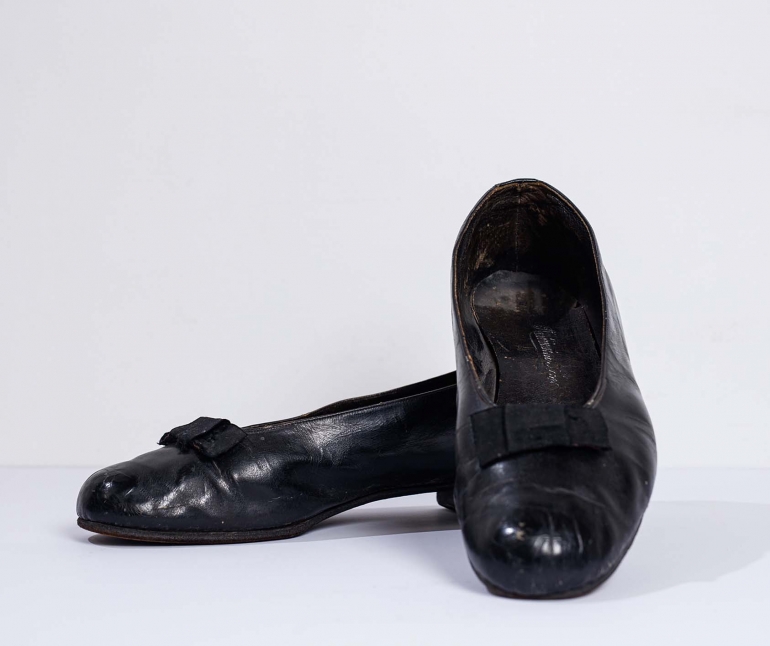
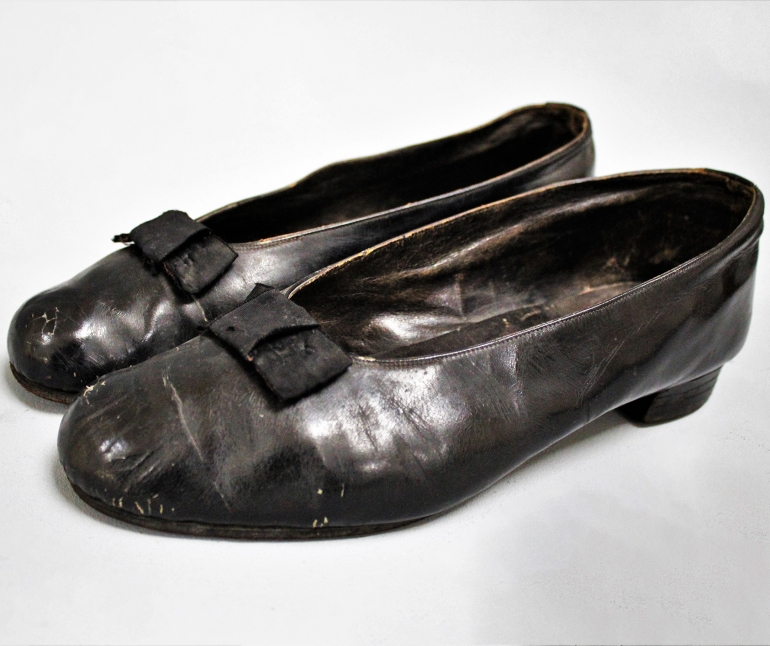
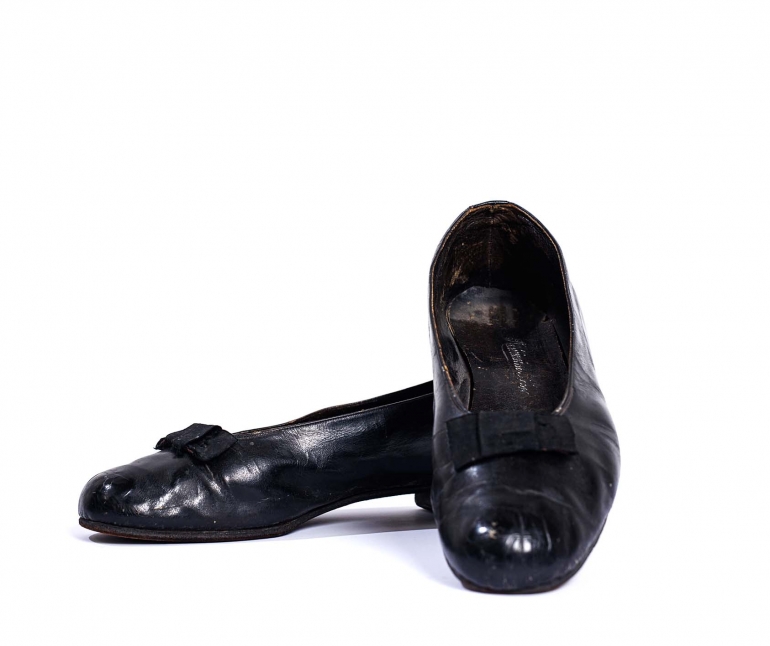
As Hovhannes Toumanian had an artistic world view and was a great lover of beauty he mastered the art of dressing. Both in art and in life, the great esthetician gave priority to taste, saying: “Taste is the scent of life”.
Toumanian paid attention to the fashion of the time, although more importantly he carried an independent and original style.
He preferred English style of dressing as it is simple and beautiful. He used to wear black suite and white neckband of classic style colors and forms in literary gatherings and festivals. His dressings were suitable with his slender figure and sensible inner world. Strangers used to take the poet for a foreigner, particularly an Englishman, as he had noble style and look.
The poet, who was an Eastern man by his habits and a European in his everyday life, used to wear an oriental style long robe with “European shoes” at home, which are still attractive from the far of years.
The house shoes not only completed Toumanian’s everyday aristocratic image, but also sometimes served as stage shoes: the Armenian actors of dramatic theater, particularly, young actor Karapet Galfayan –who moved from Constantinople to Tiflis – wore the shoes during the performance of Shakespeare's “Hamlet”.
These conspicuous house shoes are factory made and shaped like a boat.
Below is the story about production.
In the 18th century, this type of shoe was made exclusively from black patent calfskin leather, distinguished by its heel and silver clasp.
It was an important part of Western European aristocratic fashion, serving only as house shoes. The prototype of this shoe was a simple flat shoe worn by palace servants in the 15th century.
In the early 19th century, during the regency period (during the reign of Regent George IV in 1811-1820), George Brammel revolutionized the history of English fashion with a cultural movement Dendizm. Instead of vulgar luxury in all spheres of life of the elite, simple and modest elegance entered. According to this logic, the boat shoes were tied with a silk strap instead of a silver clasp and received the status of classic evening shoes.
In these types of shoes they attended opera performances, ceremonial events and dances (hence the English names of the shoe opera pumps or opera slipper, court shoe).
The uniqueness of this style lies in its open shape, which visually reduces the size of the leg and makes it more delicate.
This very classic type of shoe, which is a part of the black-and-white dress code, was worn with a tailcoat, tuxedo and a butterfly tie (white tie, black tie). Hovhannes Toumanian stands next to the famous fans of this style - Napoleon Bonaparte, Napoleon III, Edward VII, Oscar Wilde, George Byron and others. His house shoe repeats the features of an English boat shoe. It is made of patent leather and shoelaces, has a low heel and ribbon strap. The factory brand "Américaine Shoe" is embossed on the insect with white stylish letters. Dimensions: insole-shoe: 8.5 x 28 cm (corresponds to the 43rd number of modern European shoes), circumference: 66 cm, ribbon: 6 x 28 cm.
If in the beginning such shoes were the monopoly of the elite, then in the 19th century, with the advent of manufactories, they became available to the wider public.
Leading factories such as Bowhill & Elliott, Broadland Slippers, Henry Maxwell, John Lobb, and Edward Green continue to operate with the best traditions in the production of boat shoes.
The modern version of the boat shoes with the classic combination of the colors and shape of the clothes, due to its laconic and restrained style, still continues to be relevant today. It has an important place in the wardrobe of high-ranking men, and in general, those who appreciate elegance. Among them are Prince Manuel of Bavaria, Crown Prince Pavel of Greece, Prince Charles of Wales, CEO of ''The Gentleman's Gazette'', Editor-in-Chief Sven Rafael Schneider, and others.
Muchak was donated to the museum by the poet's wife on September 25, 1952 /act N5/.
They are registered in the main fund of the museum: TTGG 184 / WB 123.
The co-authors of the article


Translated by Anahit Sringyan
