
- Tuesday to Saturday: 10:30 – 16:30
Sunday: 10:30 – 15:30
Closed on Mondays


Toumanian's pocket heaters
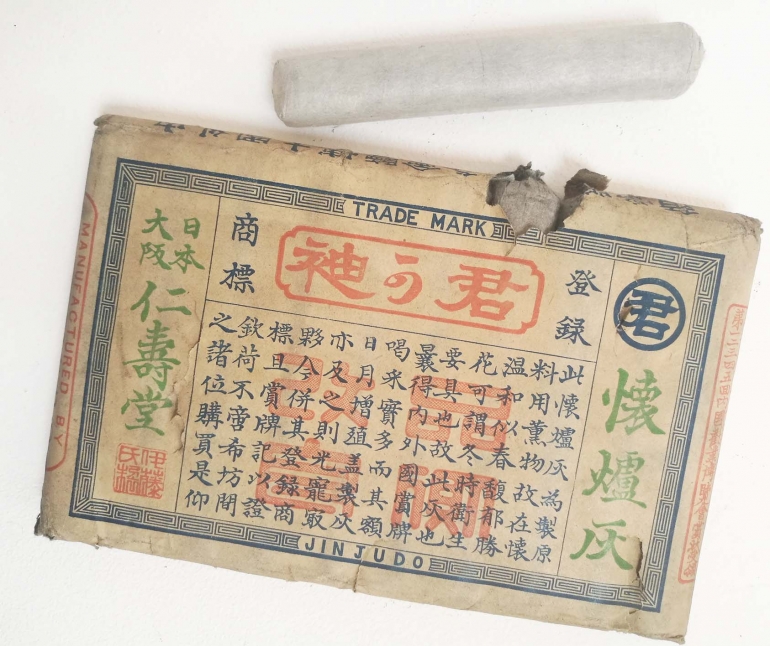
They say Toumanian was sensitive to cold. He loved fire, he loved to look at fire and meditate, to ignite it with a fire mixer, and he used to say, "The fire is the flower of winter." And this is not the whole story. In cold weather, Toumanian used to wrap in a coat with his hands in his pocket. He kept heaters — made in Japan — in his pockets, which had an interesting mechanism of retaining heat. They were filled with hot coal — gently heating the surface of the heaters in order to warm the hands but not to burn them.
There is no exact information about where the poet gained this interesting object. Possibly an Armenian novelist and educator Heghine Melik-Haykazyan presented the heaters to Toumanian. Melik-Haykazyan was a well-educated and advanced woman, who got her education in England and France, she spoke several European languages. She got married to a well-known public figure Tigran Begzadyan. They had a daughter — Varya. She spent her further life in France with her husband and daughter. Toumanian was a friend of her family. Some letters of them were kept. Toumanian hosted in their dacha many times during his vacations in Abastuman. They took some pictures there which are kept in the museum. The family members’ salon pictures, with whishing texts to poet, are also kept. Heghine was one of those few Armenian intellectuals, who traveled to the Far East, particularly to China and Japan. She wrote down the impressions from China in her sketch story ''On the Manchurian border'' (from the impressions of the tourist). She also wrote a book about Japan —''A tour in Japan'' (from my memories and impressions). Possibly, she bought the heaters during that journey, which she later gifted to Toumanian.
Anna Vardanyan and Astghik Hovhannisyan are the first ones who touched on this topic in their research.
The heaters were produced by Jinjudo Company in Osaka, with a history of more than 340 years. In 1895 the Imperial Family awarded them with special commendation for creating and distributing that unique product.
Today the production and usage of the heaters are still up-to-date in Japan. Over time the style, mechanism and types of them were changed and modernized. The heaters are produced to keep the feet and the whole body warm; they are conveniently placed in the shoes and attached inside the coat. They are disposable. Today you can heat them up for a few minutes in a microwave and then it will warm your entire body up for 12 hours.
Today, the Jinjudo Company is engaged in the production of natural aromas such as oils, sticks, and plants.
Mr. Kato, a representative of Jinjudo, about Toumanian's pocket heaters.
“These pocket heaters were sailed by our Company from the Meiji period to the Showa early period. Unfortunately, we didn’t keep the documents of these heaters and we can’t give the necessary details about them. But the advertising label on them is proving that they are the product of our Company.
We are extremely touched to imagine the way the heaters got to the poet. It is a great honor for us to see such an old product of ours after all these years in faraway Armenia.
I was able to understand Toumanian's sensuality with this beautiful poetic expression – "Fire is the flower of winter."
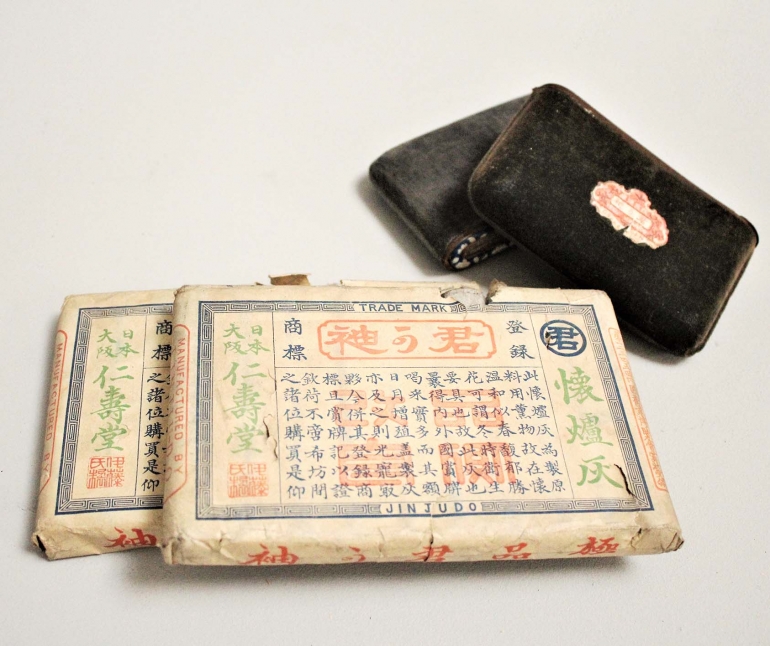
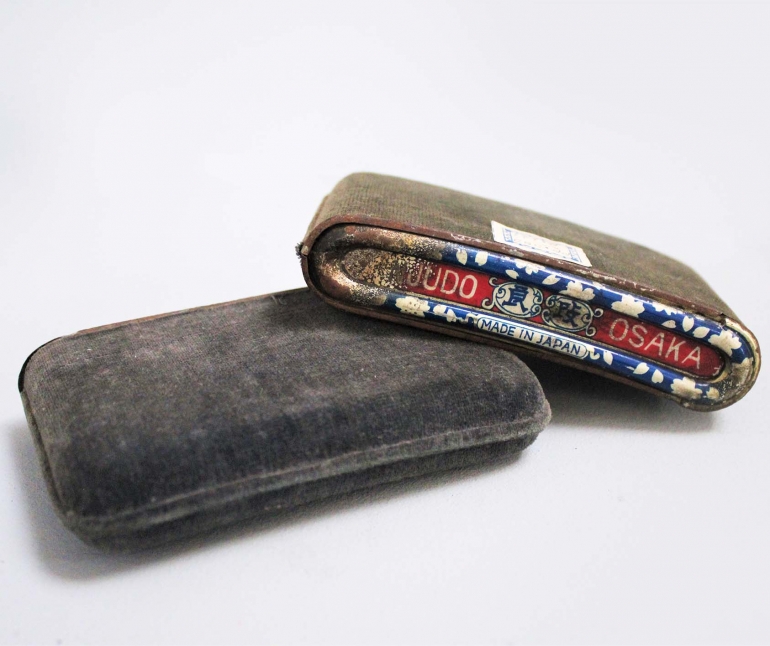
Toumanian’s pocket heaters are for multiple use, metallic (with many small round holes), rectangular with rounded sides in the form of a box covered with dark green velvet with a seam on the rib. The lid is made of metal sheet edged with floral ornament (white flowers on a blue base) with a convex belt on which the place of production is indicated in English: “MADE IN JAPAN”. The central field is bright red, in the center — the manufacturer's marking: two stylish eggs in the form of medallions (with blue hieroglyphs on the white base), an inscription on the right and left: “JINJIUDO-OSAKA”. In the center of the grooved field there is a red paper label about the manufacturer, with Japanese and English inscriptions. Inside the heaters, one centimeter above the floor, there are teeth to put a smoldering coal stick on.
Sizes: box: 12x7x2.3 cm; lid: 11.5 x2.3 cm.
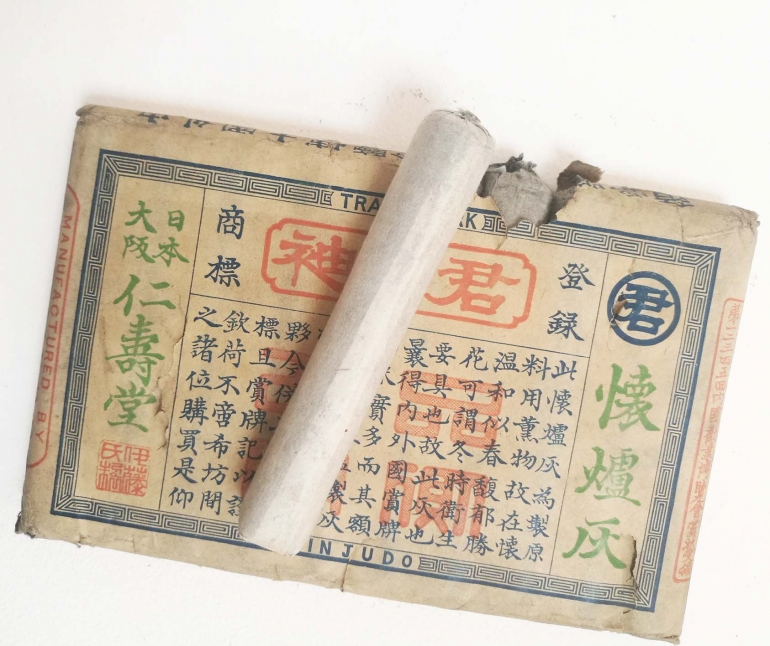
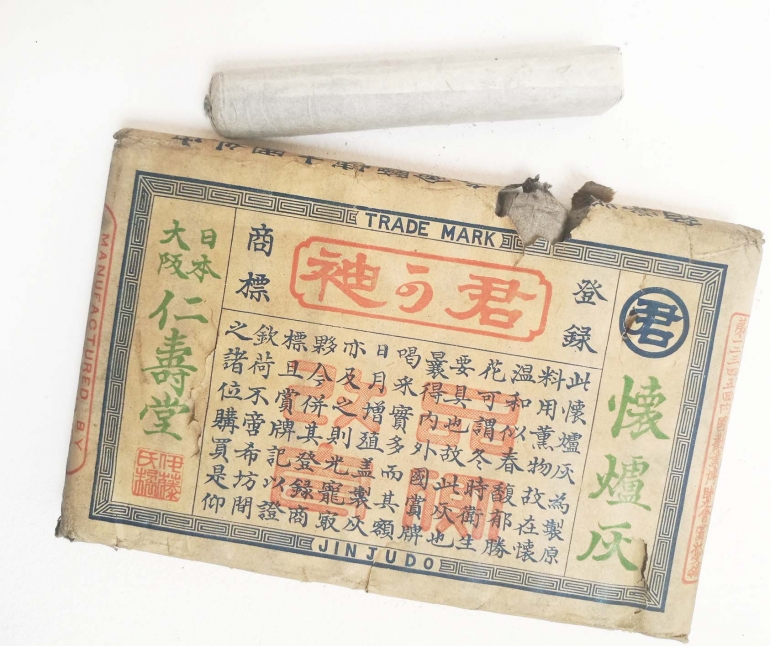
The fuel of the heaters was also kept: condensed sticks of coal dust, wrapped in paper, two identical paper packages, 10 sticks in each. The sizes of the package are 17x11x2 cm, the diameter of the tube is 1.5 cm. Japanese inscriptions – on the whole surface of the package – in red, blue and green hieroglyphs. There is a writing in English: «TRADE MARK-JUNJUDO» and «MANUFACTURED BY JINJIU-DO», and on around side՝ «JINJU-DO.THE OLDEST AND MOST WELL KNOWN INCENSE, JOSS-STICKS, SOAPS, KWAIRO AND KWAIROBI, (POCKET STOVES) MANUFACTURERS IN JAPAN».
The heaters with coal sticks were presented to the museum by the poet’s widow on February 19 1957, Act: N48, the registration number: TTGG353/ WB140-143.
Article by Vardanoush Nalbandyan

Translated by Anahit Sringyan
